Case Study - Rappa Holdings An old transformer house is turned into sophisticated offices with a warm African theme, creating a dynamic space for an energetic team. When mining company RAPPA Holdings approached Arthur Northfield of Vision Interiors to design the interiors for their new offices, Arthur was 'ecstatic' . The fact that the project involved renovating an old transformer house into A-Grade, sophisticated and technical offices was a huge incentive for Arthur, who looked forward to the challenge of taking an existing structure with a very specific function, and successfully turning it into something completely different. The nature of RAPPA Holding's business greatly informed the character of the design, and there were some main considerations. Firstly, the company buys waste products from the mining industry throughout Africa, and then extracts precious metals from this waste material - the new building had to be an appropriate place where huge deals could be struck in a credible way. Secondly, dust from the waste product had to be dealt with effectively so as not to become an issue inside the building - an important technical consideration - and one which had been a huge problem in their previous premises. Finally, RAPPA also wanted to provide a comfortable working environment for staff and business partners while retaining the rustic appeal of the transformer house. For the interior, Arthur chose a sophisticated African look that made use of natural materials such as granite and wood, with a colour palette of mainly browns and blacks. Making use of the existing double-volume space in the main entrance, it was decided to finish the floors with large, black Zimbabwean granite blocks surrounded by an unpolished granite perimeter and polished metal inserted as inlays on the corners. The granite theme continues through to the toilets and kitchen, both of which have unpolished granite floors. Black Zimbabwean granite has also been used for the basins and kitchen counters. Maple wood was chosen by Arthur for the remaining floors in the reception area and throughout the offices to add a sense of warmth, as well as a contrast to the cherry wood furniture, doors and alchitraves that had been selected. Arthur modified standard production desks in size and with details such as softer edges to tops were added and included modesty panels in perforated, brushed aluminium. The reception counter and boardroom tables were specially designed and made up and incorporated metal and glass to highlight the industrial look and feel of the environment. Soft furnishings were finished in black, with upholstery backed in a 'chocolate truffle' suede with black leather seats, adding to the warm appeal of the offices. Sofas were also finished in black suede, and placed next to small leather and lacquered coffee tables adjacent to the fireplace. The dust issue was also dealt with effectively. An air-conditioning system that pressurized the interior of the office was fitted, so that even if doors were left open, dust could not enter the environment. An air-scenting system was imported from Italy to help to further create a pleasant and well appointed surrounding. The office space, only 360m² in total, accommodates seven people, each of whom sits in semi-private spaces which are enclosed in brick. Ironically, the only 'open-plan' area is the three director's offices, which are not screened, to encourage open discussion. Mezzanine floors have been added and these support the boardrooms, the smaller of which has no windows and is used primarily for focus meetings. The original cement ceiling has been left exposed, and treated with a resin, electrical conduits have been suspended below the ceiling and allowed to run down the walls encased in perforated metal. Artistic lighting installations, for both interior and exterior, add to the rustic charm of the office. The exterior of the building has been plastered and repainted in a rustic, dusty orange and balconies for staff to enjoy the view over the site and gardens were added. This is an integral part of the industrial park and shows a level of commitment by RAPPA to nature and the environment. | 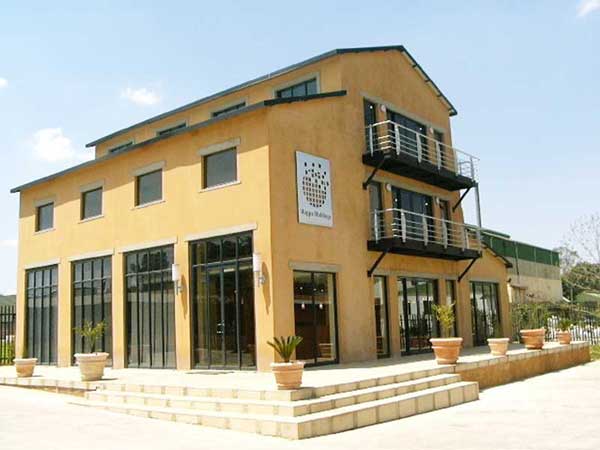 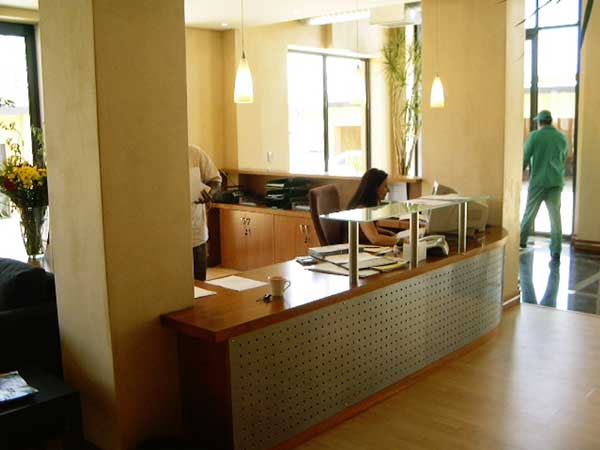 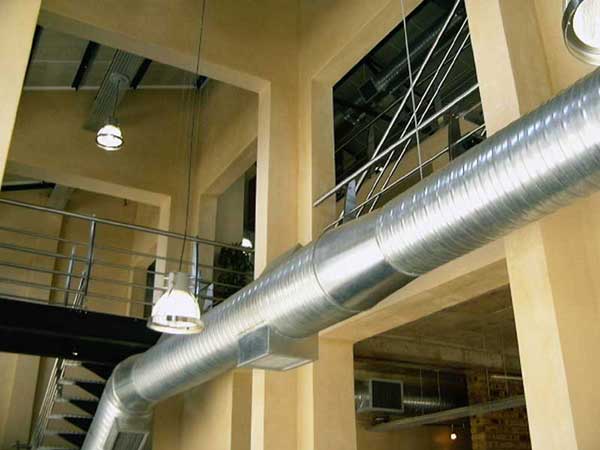  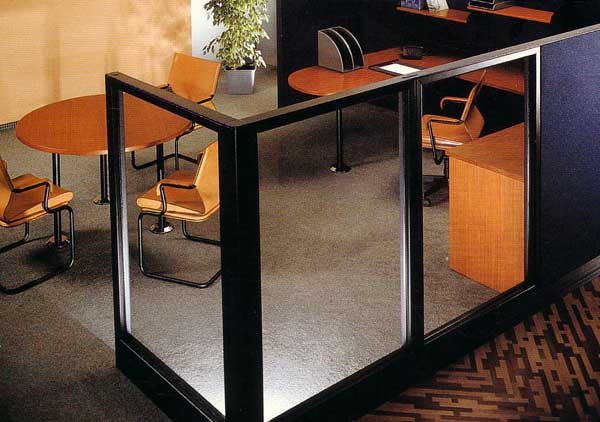 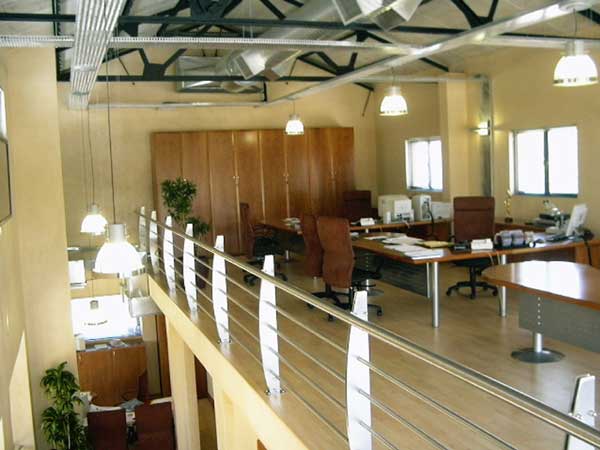 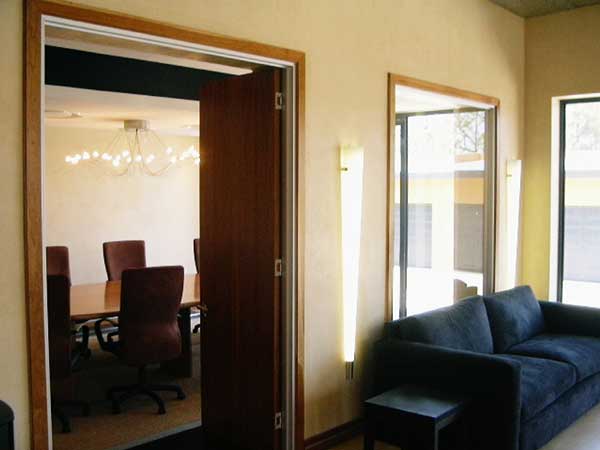 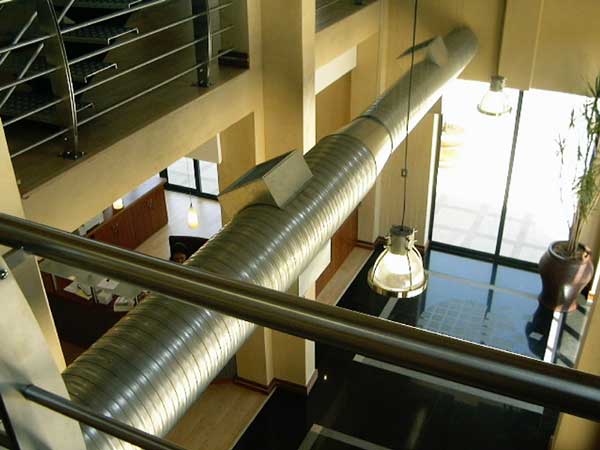 |
